You’ve noticed it for months now. Maybe it’s the parting that looks wider in photos than it does in the mirror. Maybe it’s the bathroom floor after every wash. Maybe a relative pointed it out at a wedding and you’ve been thinking about it ever since.
And somewhere along the way, you started googling hair transplant cost in Hyderabad at 1am, then closed the tab because the idea of surgery, the recovery time, the scarring worries, felt like too much for a problem that’s mostly about how you feel walking into a room.
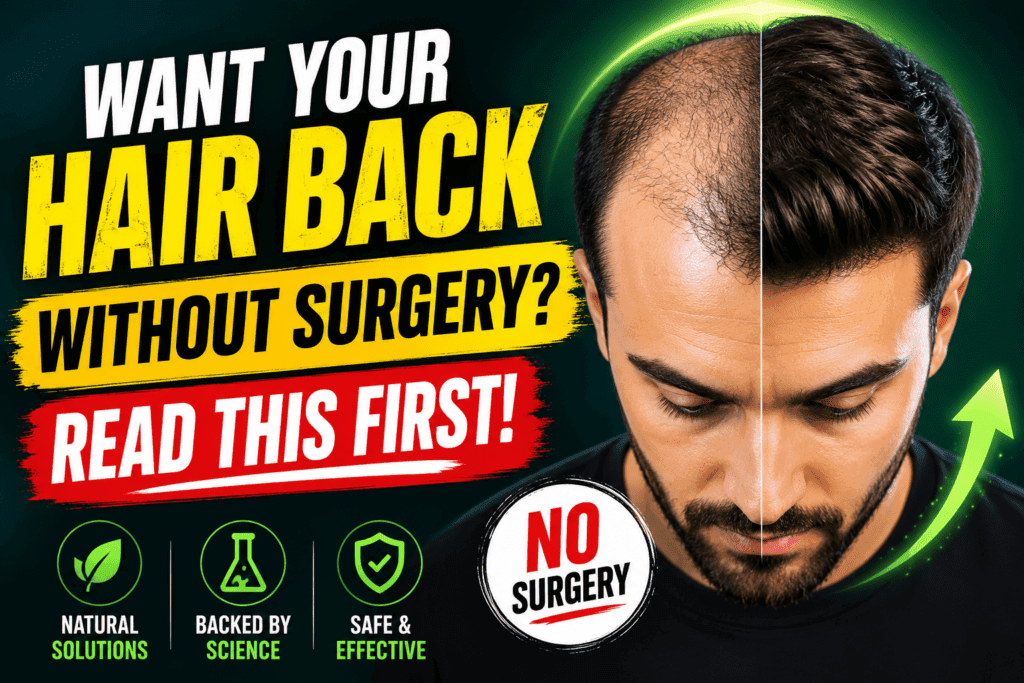
Here’s the part nobody tells you early enough. You don’t have to choose between doing nothing and going under the knife. There’s a whole middle path that thousands of people in Hyderabad and Vizag are quietly using right now, and most of them aren’t talking about it at family functions.
That path is Hair Replacement Without Surgery in Hyderabad
Table of Contents
ToggleQuick Answer Hair Replacement Without Surgery in Hyderabad
Non surgical hair replacement is a method of restoring hair density using a custom made hair system, attached to your scalp using bonding, tape, or clips, without any cuts, stitches, or downtime. It’s reversible, looks natural when done well, and results are visible the same day, unlike transplants which take months to show full growth.
What Is Non Surgical Hair Replacement, Actually?
Strip away the marketing language and it’s simple. A technician maps your scalp, matches your hair colour, texture, and density, and creates a custom base, usually a thin skin like material or a lace mesh, with real or synthetic hair knotted into it strand by strand.
That base gets attached to your scalp. Some studios use medical grade adhesive tape that lasts two to four weeks. Others use bonding glue for a more permanent feel, or clip based systems you put on and take off yourself like a hairpiece, except far more refined than what that word probably brings to mind.
Think of it less like a wig and more like a hairline extension. A client at one of the Hyderabad studios we’ve worked with described it well. He said it’s not fake hair sitting on top of his head, it’s his hairline filled back in.
The technology has moved a long way from the obvious toupees of twenty years ago. Modern systems use individually knotted hairs at the front, so the hairline has that slightly irregular, natural growth pattern instead of a straight, doll like edge.
Why This Matters More Than People Admit
Hair loss isn’t just a cosmetic issue and pretending otherwise doesn’t help anyone. Studies on hair loss and self esteem consistently show a connection between visible thinning and lower confidence, particularly in younger men and women who feel like they’re losing something before their time.
In cities like Hyderabad and Vizag, where appearance plays into everything from arranged marriage meetings to client facing jobs in IT and sales, hair loss often gets treated as a problem to solve quietly rather than discuss openly.
Non surgical hair replacement matters because it closes the gap between wanting your hair back and being willing to commit to surgery. No general anaesthesia. No six month wait to see if grafts take. No worrying about a linear scar at the back of your head if you ever decide to keep your hair short again.
For someone whose hair loss has accelerated due to stress, thyroid issues, or genetics, and who needs a result this month, not next year, this is often the realistic answer.
The Complete Process, Step by Step
Step 1: The Consultation and Scalp Assessment
What it means
This is where a specialist looks at your scalp, your existing hair density, your hairline shape, and the pattern of your loss. They’ll usually classify it using the Norwood scale for men or the Ludwig scale for women.
Why it matters
Skipping a proper assessment is how people end up with a system that doesn’t match their face shape or hair growth direction. A good consultation also rules out conditions like active alopecia areata or scalp infections that need medical attention first.
How to do it
Book an in person consultation rather than relying on photos sent over WhatsApp. A trained technician needs to physically check scalp condition, oil levels, and existing hair texture under proper lighting.
Example
A client walking into a studio in Madhapur with a receding hairline and thinning crown will need a different base shape than someone with an even, all over thinning pattern. The consultation decides this before anything is built.
Pro tip
Bring an old photo from five or so years ago when your hairline was fuller. It gives the technician a real reference point instead of guessing what “natural” should look like for your face.
Step 2: Custom Base Design and Hair Matching
What it means
Once your scalp is assessed, the studio designs a custom base, choosing the right material, density, and hair colour to match what’s left of your natural hair.
Why it matters
A mismatched base is the single biggest reason non surgical systems look obvious. Hair that’s too dark, too uniform, or too thick compared to your natural growth gives it away instantly.
How to do it
Good studios source hair in multiple shades and blend two or three tones, the way your natural hair actually has variation, instead of using one flat colour.
Example
Someone with salt and pepper grey at the temples needs a base with mixed grey and natural strands woven in, not solid black hair that screams artificial the moment sunlight hits it.
Pro tip
Ask to see the base under natural daylight, not just studio lighting, before it’s finalised. Indoor lights can make colour matching look perfect when it isn’t.
Step 3: Attachment
What it means
This is the actual fitting, where the base is bonded, taped, or clipped onto your scalp.
Why it matters
The attachment method affects how long the system stays on, how it feels day to day, and how much maintenance it needs.
How to do it
Tape and bonding methods need periodic studio visits, usually every two to four weeks, for reapplication. Clip systems are removable daily but need confident handling so they don’t shift during the day.
Example
Working professionals who attend client meetings regularly often prefer bonded systems because they don’t have to think about it once it’s on. Someone who swims or exercises heavily might lean toward a more secure, longer hold adhesive.
Pro tip
Don’t choose your attachment method based on price alone. Choose it based on your lifestyle. A salesman who’s on the move all day has different needs than someone working a desk job.
Step 4: Styling and Cutting In
What it means
After attachment, the hair system gets cut and styled to blend with your existing hair.
Why it matters
A system that isn’t cut into your real hair sits like a separate piece. Blending is what makes it disappear into a normal looking head of hair.
How to do it
This needs a stylist trained specifically in hair systems, not a regular salon haircut. They trim the system hair while it’s attached, working with your real hair length at the sides and back.
Example
A client with short, neat hair on the sides will need the system trimmed to match that exact length, so there’s no visible line where real hair ends and system hair begins.
Pro tip
Get this done at the same studio that fitted the system. They already know the base shape and won’t accidentally cut into the knotting at the front.
Step 5: Maintenance and Aftercare
What it means
Ongoing care to keep the system clean, the bond strong, and your own scalp healthy underneath it.
Why it matters
Neglecting maintenance is where most disappointment comes from. Build up of oil, sweat, and product under a bonded system can cause itching, odour, and even slow down the health of your natural hair underneath.
How to do it
Most studios recommend specific shampoos that won’t break down the adhesive, along with scheduled cleaning appointments. Your real scalp still needs to breathe and stay clean underneath the base.
Example
A client who skipped his three week reapplication appointment because of work travel came back to find the edges lifting and visible. A simple scheduling habit would have avoided that entirely.
Pro tip
Treat your reapplication appointments like a haircut you can’t skip. Put them in your calendar the same day you get the system fitted.
Common Mistakes People Make
Mistake: Choosing the cheapest studio without checking their actual work
Impact: Poor quality bases, bad colour matching, and systems that look obviously fake.
Solution: Ask to see real client results, not just stock photos, and ask how long they’ve been doing this specific work.
Mistake: Skipping the scalp health check before starting
Impact: Worsening underlying conditions like dandruff, fungal infections, or undiagnosed alopecia.
Solution: Insist on a scalp assessment, and if something looks off, ask the studio to refer you to a dermatologist first.
Mistake: Ignoring maintenance schedules
Impact: Lifting edges, visible gaps, and reduced lifespan of the hair system.
Solution: Set calendar reminders for reapplication and stick to the studio’s recommended cleaning routine.
Mistake: Picking a system that’s too dense or too dark
Impact: An obviously artificial look that draws attention instead of avoiding it.
Solution: Always ask for colour and density matching in natural daylight before committing.
Best Practices That Actually Make a Difference
Go in with realistic expectations rather than a photo of a celebrity hairline that doesn’t match your face shape. Ask your technician what’s achievable given your scalp condition and bone structure.
Get a trial fitting before committing to a long term plan if the studio offers one. It tells you a lot about comfort and how it sits with your daily routine.
Budget for maintenance from day one, not as an afterthought. Non surgical systems aren’t a one time purchase, they’re an ongoing relationship with a studio.
Keep your natural hair and scalp healthy underneath. A clean, well cared for scalp makes any hair system sit better and last longer.
Non Surgical Hair Replacement vs Other Options
| Option | Downtime | Visible Results | Reversible | Typical Cost Range (INR) |
|---|---|---|---|---|
| Non surgical hair replacement | None | Same day | Yes | 25,000 to 90,000 depending on system and studio |
| Hair transplant (FUE/FUT) | 1 to 2 weeks | 8 to 12 months for full growth | No | 60,000 to 2,50,000+ |
| PRP therapy | None | Gradual over months | Ongoing treatment | 4,000 to 10,000 per session |
| Minoxidil/Finasteride | None | 3 to 6 months, ongoing use needed | Reversible if you stop | 1,000 to 3,000 monthly |
Costs vary by studio, city, and the extent of coverage needed, so treat this as a general range rather than a fixed price.
A Real Client Scenario
A 34 year old IT professional from Madhapur came to one of the studios we work with after two years of thinning at the crown that medications hadn’t slowed down. He’d looked into transplant clinics but kept putting off the consultation because of work travel and the recovery time involved.
The challenge wasn’t just the hair loss itself, it was that he had an important client facing role and couldn’t take weeks off for recovery, scarring concerns, or unpredictable graft results.
He went through a full scalp assessment, chose a tape based system for flexibility around his travel schedule, and had it fitted and cut in within the same week.
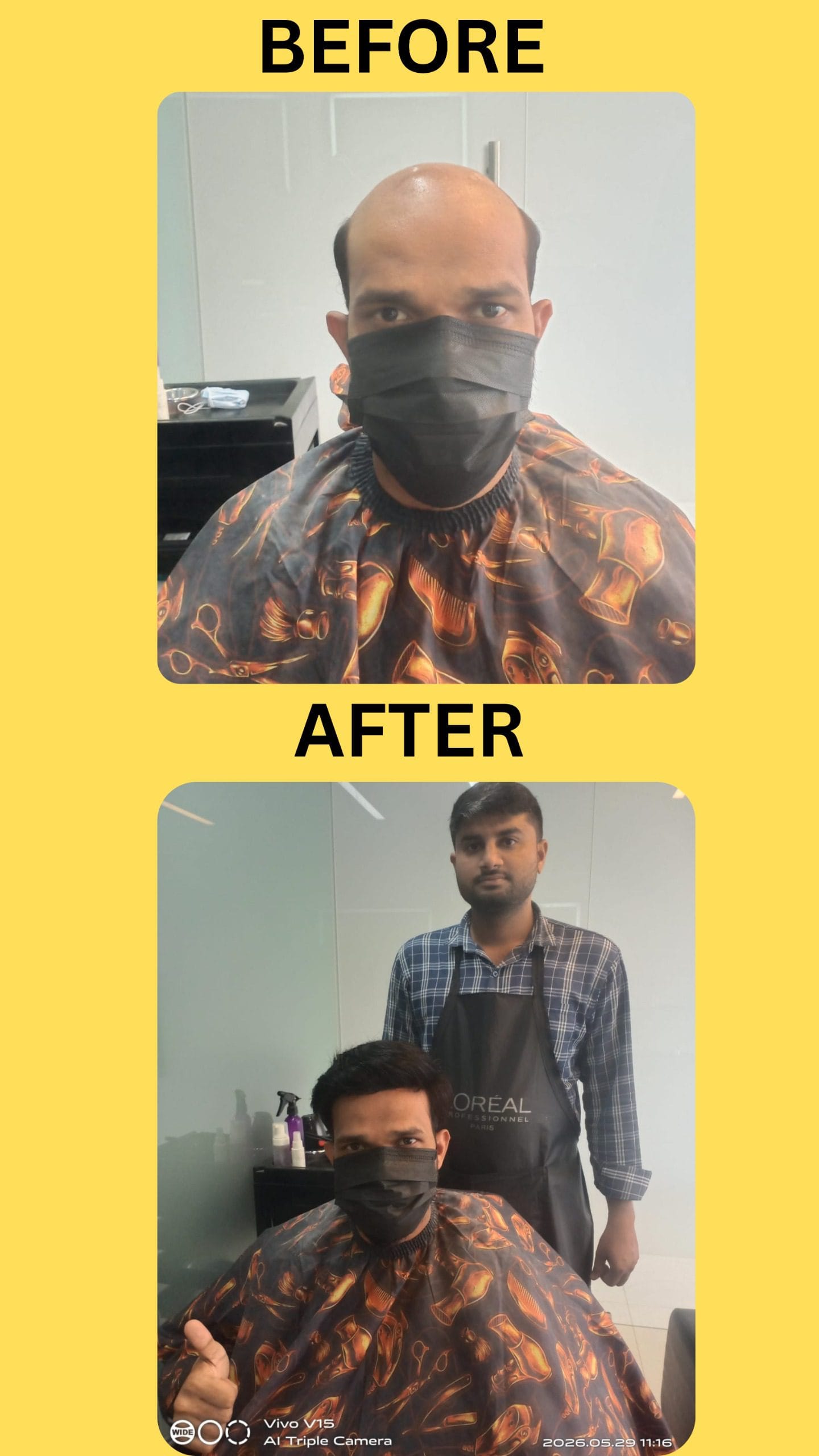
Within ten days, his colleagues noticed a difference but assumed he’d simply changed his hairstyle. He kept his reapplication appointments every three weeks and has stayed with the same system for over a year now, adjusting density slightly as his confidence with maintenance grew.
This kind of outcome is common, not exceptional, when the process is done with proper assessment and a studio that takes maintenance seriously.
Expert Tips for Getting the Best Results
Don’t rush the first consultation. The studios that ask the most questions about your lifestyle, work, and exercise habits before recommending a system are usually the ones who get the fit right the first time.
If you wear glasses, mention it during fitting. Glasses can affect how the system sits at the temples and this is easy to overlook until it’s already been built.
Ask about humidity resistance if you’re in Vizag, where coastal humidity can affect bonding differently than the drier heat in Hyderabad. A good studio will already account for this in their adhesive choice.
Revisit your system style every year or so. Hairlines and preferences shift slightly with age, and a style that worked at thirty might need a small adjustment by thirty five.
Frequently Asked Questions
Is non surgical hair replacement permanent?
No, it’s not permanent in the way a transplant is. The hair system itself can last six months to a year with proper care, and it needs periodic reapplication, but you can also remove it entirely whenever you choose.
Does it damage your natural hair underneath?
When fitted and maintained correctly by a trained technician, it shouldn’t damage healthy hair. Problems usually come from poor application, leaving it on too long without cleaning, or going to an inexperienced studio.
How much does non surgical hair replacement cost in Hyderabad?
Pricing typically ranges from around 25,000 to 90,000 rupees depending on the system type, hair quality, and ongoing maintenance plan, though exact costs vary by studio.
Can I exercise and swim with a hair system on?
Yes, with the right bonding method. Tape and strong adhesive bonds are generally rated for swimming and heavy sweating, though you should ask your specific studio about their adhesive’s water resistance.
How is this different from a wig?
A wig typically sits over your whole head and is removed daily. A non surgical hair system is usually bonded directly to your scalp at the hairline and crown, blended with your existing hair, and stays on for weeks at a time.
Will people be able to tell I'm wearing a hair system?
With a properly matched base, colour, and styling, most people won’t notice anything beyond thinking your hair looks fuller or that you’ve changed your style. The giveaways usually come from bad colour matching or a poorly cut hairline.
How often do I need to visit the studio for maintenance?
Most bonded or taped systems need reapplication every two to four weeks. Clip in systems need less frequent studio visits but more daily handling on your part.
Is non surgical hair replacement suitable for women too?
Yes, women experiencing thinning from conditions like female pattern hair loss, postpartum shedding, or PCOS related hair loss often use non surgical systems, particularly designs focused on crown and parting coverage.
What's the difference between bonding and tape attachment?
Bonding uses a liquid adhesive for a stronger, longer lasting hold, often preferred by people who want minimal daily thought about it. Tape is generally easier to remove and reapply, suiting people who want more flexibility.
Can I dye or style the hair system like real hair?
Many systems made with human hair can be styled and even coloured to some extent, though this should always be done by the studio rather than at home, since the wrong products can damage the base material.
Key Takeaways
- Non surgical hair replacement restores visible density without surgery, scarring, or downtime
- Results are visible the same day, unlike transplants which take months to show growth
- Success depends heavily on proper scalp assessment, colour matching, and ongoing maintenance
- Costs in Hyderabad and Vizag typically range from 25,000 to 90,000 rupees depending on the system
- Maintenance appointments every two to four weeks are essential for a natural, lasting look
- It’s reversible, making it a lower commitment option compared to permanent surgical procedures
Bringing It All Together
Hair loss doesn’t have to mean choosing between accepting it and committing to surgery you’re not ready for. Non surgical hair replacement sits in that overlooked middle ground, giving you a real, natural looking result without the recovery time, the scarring risk, or the months of waiting that come with a transplant.
What separates a great result from a disappointing one almost always comes down to the studio you choose and how seriously you take maintenance once it’s fitted. Get the assessment right, get the colour and density matched properly, and stay consistent with your appointments, and the difference shows.
If you’ve been putting off doing something about your hairline because surgery felt like too big a step, this is worth a proper look before you decide either way.
Ready to See What’s Possible For You?
Book a free consultation with a trusted non surgical hair replacement studio in Hyderabad or Vizag and get an honest assessment of what would actually work for your hair, your lifestyle, and your budget. No commitment, just clarity on your options.