Hair Bonding in Hyderabad 2026: Cost, Benefits, Procedure, Maintenance and Everything You Need to Know Before You Go
You wake up, look in the mirror, and that thinning patch on the crown just keeps staring back at you. Wigs feel uncomfortable. Transplants feel like a big commitment. And you’ve probably Googled hair bonding at least twice already wondering if it’s actually worth it. Here’s the honest answer: it depends. But for a lot of people dealing with hair loss, bonding has genuinely changed how they feel walking out the door every morning. Not just appearance-wise, but confidence-wise too. This guide covers everything you need to know about hair bonding in 2026. The procedure, the real cost, how long it lasts, what maintenance actually looks like day to day, and whether it’s the right call for your situation.
Table of Contents
ToggleQuick Answer
Hair bonding is a non-surgical hair replacement method where a custom hair system (made from real or synthetic hair) is attached to your scalp using medical-grade adhesive, tape, or a combination of both. It looks natural, lasts 3 to 6 weeks per session, costs anywhere from Rs. 3,000 to Rs. 25,000 depending on the type of system, and requires regular maintenance to keep it looking fresh.
What Is Hair Bonding?
Hair bonding, also called hair patch bonding or hair system bonding, is a technique where a manufactured hairpiece is fixed directly onto the scalp using a bonding adhesive or double sided tape.
The hairpiece itself is built on a base, typically made from lace, skin (polyurethane), or a combination. Real human hair is individually tied or injected into this base to mimic how hair grows naturally from the scalp. Once it’s bonded, you genuinely cannot tell the difference from the outside. Think of it this way. You’ve probably seen someone and had no clue they were wearing a hair system. That’s how good modern bonding has gotten, especially when it’s done by someone who knows what they’re doing. It’s not the old “toupee that flies off in the wind” situation. Today’s bonded hair systems sit flush against the scalp, move with you, and handle sweat, rain, and even light swimming.
Why Hair Bonding Has Become Such a Popular Choice
Hair transplants cost a lot, take months to show results, and not everyone is a candidate. Wigs sit on top of the head and shift around. Hair bonding sits in between, and for many people, it hits the sweet spot.
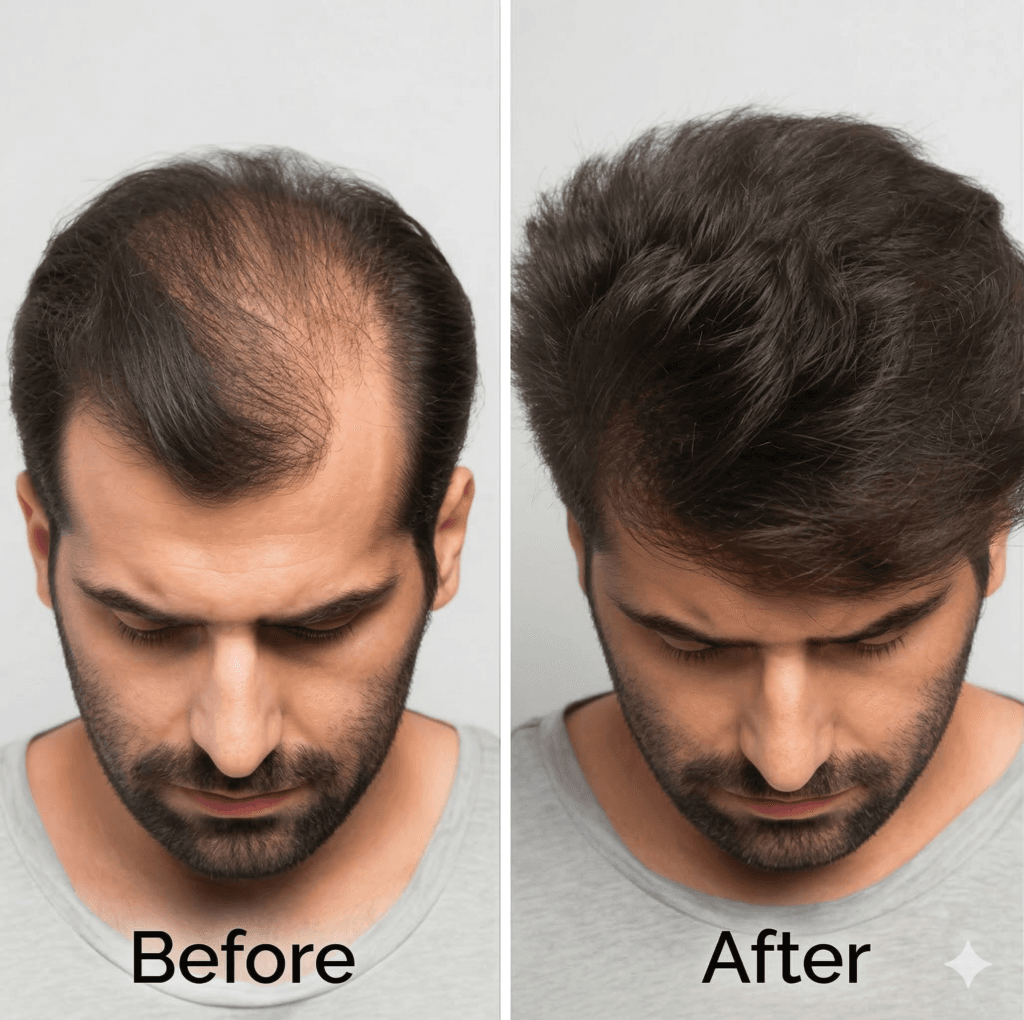
It’s immediate. You walk in with hair loss, you walk out with a full head of hair. No waiting period.
It’s non-surgical. Zero incisions, zero downtime, zero recovery. You can go straight to work or a meeting after the session.
It looks realistic. When the hair system is matched well to your natural hair texture, color, and density, it blends in seamlessly. Even people who know you well often can’t tell.
It works for most types of hair loss. Whether it’s male pattern baldness, alopecia, thinning from stress, or post-chemo regrowth, bonding can cover it.
It’s reversible. If you don’t like it, you stop. There’s no permanent commitment the way there is with a transplant.
Types of Hair Bonding: Which One Is Right for You?
Not all bonding methods are the same. Your technician will usually recommend one based on your lifestyle, scalp condition, and how long you want the bond to last.
Adhesive Bonding (Glue-Based)
This uses a liquid adhesive applied along the perimeter of the hair system. It creates a very secure hold that can last 3 to 6 weeks. Good for people who want maximum durability and an active lifestyle.
The downside is that removal needs to be done carefully. Ripping it off without a proper solvent can irritate or damage the scalp.
Tape Bonding (Double-Sided Tape)
Special double-sided tape is placed along the edges of the hairpiece and pressed onto the scalp. It’s easier to remove and reapply, and gentler on the skin. The bond usually lasts 1 to 3 weeks depending on the tape type and your scalp conditions.
This is often preferred by beginners because the maintenance process is simpler.
Hybrid Bonding (Glue + Tape)
A combination approach where tape holds the front hairline area and glue secures the back and sides. It balances hold strength with flexibility.
Many studios in Hyderabad and across India use this as a default because it works well across different hair types and scalp conditions.
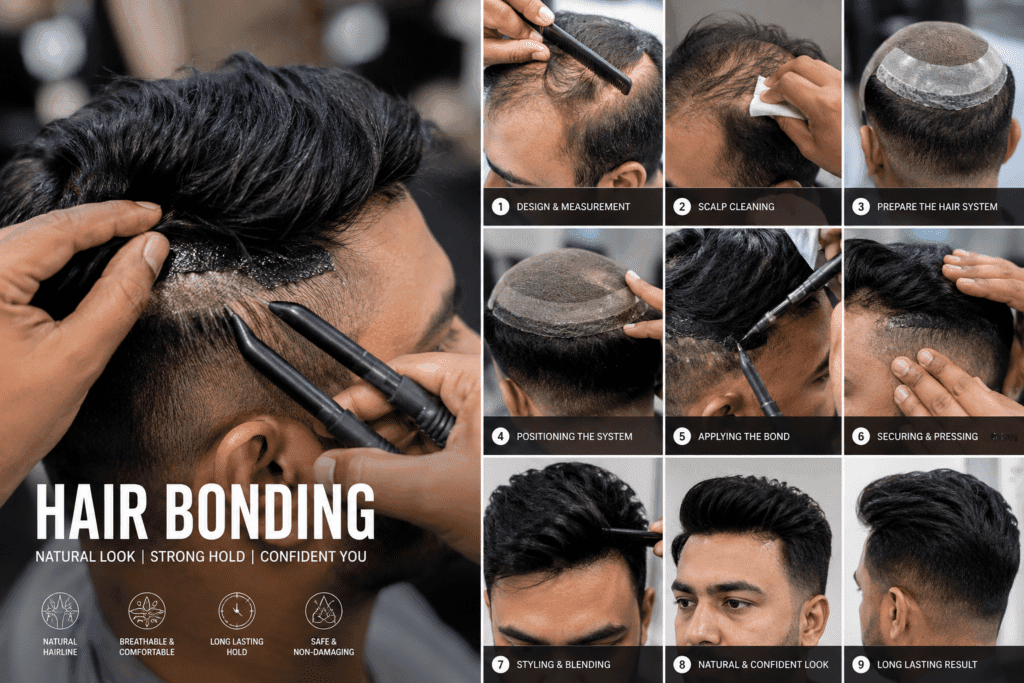
The Hair Bonding Procedure: Step by Step
Step 1: Consultation and Hair Matching
This is where everything starts. A good technician will look at your natural hair color, texture, wave pattern, and density. They’ll recommend a hair system that matches as closely as possible.
If you rush this part, you’ll regret it. A poorly matched system is what makes bonded hair look “fake.” Spend time here.
Step 2: Scalp Preparation
The existing hair in the bonding area is usually shaved or trimmed close to the scalp. The skin is cleaned thoroughly to remove oil, sweat, and any residue that could weaken the bond.
Some studios use a scalp primer or protectant before applying adhesive. This also helps people with sensitive skin avoid reactions.
Step 3: Applying the Bonding Agent
Depending on the method chosen, adhesive or tape is applied to the perimeter or base of the hair system. The technician allows it to get slightly tacky before placement.
This step requires precision. The positioning of the hairline especially needs to feel natural to your face shape.
Step 4: Placement and Pressing
The hair system is carefully positioned and pressed onto the scalp. The technician checks alignment from multiple angles, front, side, and back, before fully setting the bond.
Once placed, it’s pressed firmly and given time to cure. Some adhesives use heat to activate the bond.
Step 5: Blending and Styling
The technician blends the hairpiece with any remaining natural hair. Cutting, layering, and styling are done to make the transition seamless. This is the part that takes real skill.
A session from start to finish usually takes 1.5 to 3 hours depending on the studio and complexity.
Hair Bonding Cost in India (2026)
This is where most people have questions. Costs vary based on the city, the studio’s experience level, and the type of hair system you choose.
Type of System | Estimated Cost Per Session (India) |
Synthetic Hair Bonding | Rs. 2,000 to Rs. 5,000 |
Human Hair System (Basic) | Rs. 6,000 to Rs. 12,000 |
Human Hair System (Premium) | Rs. 15,000 to Rs. 30,000 |
Maintenance / Reapplication | Rs. 1,500 to Rs. 4,000 |
Full Hair System Replacement | Rs. 8,000 to Rs. 25,000+ |
In Hyderabad specifically, mid-range studios charge around Rs. 8,000 to Rs. 15,000 for a quality human hair bonding session. Premium studios catering to film industry clients or high-end clientele can go above Rs. 30,000.
Keep in mind, the hair system itself usually needs to be replaced every 6 to 12 months depending on wear and care. Factor that into your annual budget.
Hair Bonding Maintenance: What It Actually Looks Like
This is the part most guides skip over, and it’s honestly one of the most important things to understand before you commit.
Reapplication frequency. Depending on your bonding method and lifestyle, you’ll be visiting the studio every 2 to 4 weeks for a maintenance session. This involves removing the old bond, cleaning the scalp and hair system, checking the base for any wear, and rebonding.
Daily care at home. You’ll use specific shampoos that are sulfate-free and gentle. Harsh shampoos break down adhesive faster and can damage the hair system. Your technician should give you a care kit or at least clear instructions.
Sweating and swimming. Modern adhesives handle light sweat well. Heavy gym sessions and swimming can wear the bond faster. Some studios offer water-resistant adhesive options if you’re very active.
Sleeping. You can sleep with a bonded system on. Many people use a satin or silk pillowcase to reduce friction. Tying the hair loosely or wearing a soft sleep cap helps the system last longer.
Avoiding heat near the bond. While the hair can be styled with heat tools, keeping high heat away from the bonded edges protects the adhesive.
Scalp health. Because the scalp is covered, you need to be consistent about cleaning during maintenance visits. A scalp that’s never cleaned under the system can develop buildup or irritation over time.
Common Mistakes People Make With Hair Bonding
Choosing the wrong studio. This is the biggest one. A skilled technician makes bonding look completely natural. A rushed or unskilled one can make it obvious. Research properly. Look at real before and after photos, not just the stock images on their website.
Skipping maintenance sessions. People sometimes delay their reapplication to save money. What ends up happening is the bond loosens at the edges, the system starts lifting, and it looks bad. Worse, it can irritate the scalp. Maintenance is not optional.
Using the wrong products at home. Alcohol-based products, heavy oils near the bonded edges, and silicone serums can all weaken the adhesive. Ask your studio what’s safe to use.
Not testing for adhesive sensitivity. Some people have skin reactions to certain bonding agents. A good studio will do a patch test before the full application, especially if you have sensitive skin. Don’t skip this.
Expecting zero maintenance. Hair bonding is low maintenance compared to many alternatives, but it’s not zero maintenance. Anyone who promises otherwise is overselling it.
Real Story: What Happens When It’s Done Right
A 34-year-old professional in Hyderabad came in dealing with stage 3 pattern baldness. He was in client-facing work and the hair loss was affecting how he showed up in meetings.
The studio matched his natural dark brown hair with a mid-density human hair system on a lace base. A hybrid bonding method was used. Total session time was about 2.5 hours.
He came back for maintenance every 3 weeks. Within 6 months, he said the biggest change wasn’t how others saw him. It was how he felt walking into a room. That kind of result, when the work is done well, is not unusual.
Expert Tips for Getting the Most Out of Hair Bonding
Invest in a quality system upfront. A cheaper synthetic system might save you money now, but it wears out faster, looks less natural, and often needs replacement within 3 to 4 months. A good human hair system lasts 9 to 12 months with proper care and actually costs less annually.
Build a relationship with your technician. The more they understand your lifestyle, scalp condition, and styling preferences, the better the results over time. This isn’t a transaction. It’s an ongoing service.
Take photos at each maintenance session. This helps you track the condition of the hair system and the scalp over time. If something starts to shift, you’ll catch it early.
Communicate any discomfort immediately. If the bond feels too tight, you notice unusual scalp irritation, or the system feels like it’s pulling, don’t wait until your next appointment. Call the studio.
Ask about tape-free options if you have oily skin. People with naturally oily scalps often find that certain adhesives break down faster. Your technician can suggest alternatives like nano-rings or clip-based systems depending on your hair density.
FAQ
Hair bonding is a non-surgical method where a custom hair system made from real or synthetic hair is attached to the scalp using medical-grade adhesive or double-sided tape. The system is matched to your natural hair and blended seamlessly to look completely natural.
Depending on the bonding method and your lifestyle, a bond typically lasts 3 to 6 weeks. Maintenance and reapplication are needed regularly to keep the system secure and looking fresh.
Yes, when done by a trained professional using quality materials. It is important to use skin-safe adhesives, clean the scalp during maintenance visits, and avoid leaving the bond on beyond the recommended period.
In Hyderabad, hair bonding sessions generally range from Rs. 6,000 to Rs. 20,000 for a complete human hair system application. Maintenance sessions are typically Rs. 1,500 to Rs. 4,000 per visit.
Yes. You can wash your bonded hair, but you should wait at least 24 to 48 hours after the application to let the bond fully cure. Use sulfate-free shampoo and avoid scrubbing the bonded edges.
It does not damage existing hair directly. However, if the scalp is not cleaned properly during maintenance, or if adhesive is removed without proper solvent, it can cause scalp irritation or minor breakage along the edges.
Most people visit every 2 to 4 weeks depending on their bond type, lifestyle, and how fast their natural hair grows. Your technician will recommend a schedule based on your specific situation.
Yes, though heavy sweating and swimming can wear the bond faster. There are water-resistant adhesive options for people with very active lifestyles. Discuss this with your studio before the application.
Human hair systems look and feel more natural, respond to styling tools the way real hair does, and last significantly longer. Synthetic systems are cheaper upfront but wear out faster and have a slightly less natural texture under close inspection.
No. Hair bonding is a temporary, non-surgical solution that requires regular maintenance. It does not treat the underlying cause of hair loss. For permanent solutions, hair transplant surgery or medical treatments like PRP and minoxidil are the primary options.
Key Takeaways
- Hair bonding is a non-surgical, immediate solution for hair loss that delivers realistic results the same day
- The procedure involves consultation, scalp prep, bonding agent application, placement, and styling, taking roughly 1.5 to 3 hours
- Costs in India range from Rs. 3,000 for basic synthetic systems to Rs. 25,000 or more for premium human hair systems
- Maintenance is required every 2 to 4 weeks and includes reapplication, scalp cleaning, and system care
- Human hair systems look better, last longer, and are the preferred choice for anyone wanting a natural appearance
- Common mistakes include choosing the wrong studio, skipping maintenance, and using the wrong home care products
- Hair bonding is a great middle-ground option between wigs (low commitment, less natural) and transplants (high cost, surgical)
Wrapping Up
Hair loss is not just a physical thing. It affects how you feel, how you present yourself, and sometimes how you show up in your own life. Hair bonding, when it’s done well, gives you a way to walk back into your life with that confidence intact.
It is not magic. It takes commitment, regular upkeep, and a skilled technician you trust. But for the right person, it is genuinely one of the most effective, accessible solutions available right now.
If you’ve been sitting on the fence about it, the best next step is simply talking to someone who does it well. Go in for a consultation, ask the questions you have, and see the work they’ve done for other clients. That one conversation usually makes the decision a lot clearer.
Ready to Take the Next Step?
If you’re based in Hyderabad and want expert hair bonding done right, book a free consultation with our team today. We’ll match you to the right system, walk you through the process, and give you a clear picture of what to expect before you commit to anything.
WhatsApp us or fill out the contact form to get started. Real results, real hair, no guesswork.