
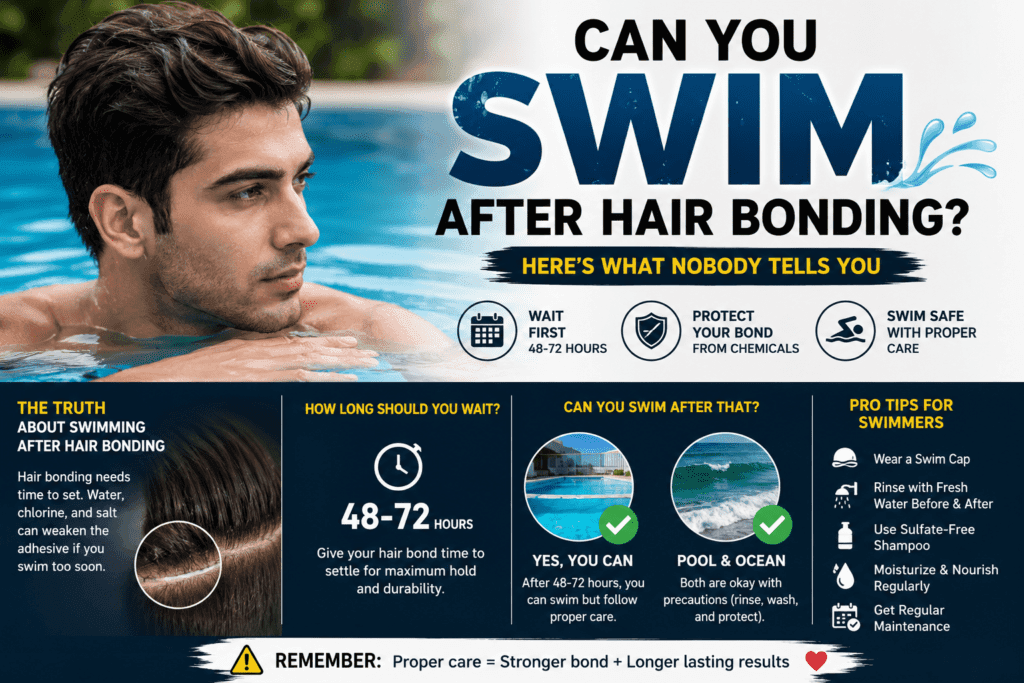
Can You Swim After Hair Bonding? Here's What Nobody Tells You
That One Question Everyone Has But Rarely Asks
You just got your hair system done. It looks great. You feel like yourself again, maybe even better. And then someone mentions a pool party, or you’re planning a beach trip, or you just want to go for your regular morning swim. And suddenly you’re second-guessing everything. Can the water ruin it? Will the bond hold? Is swimming completely off the table now? Most clinics don’t give you a clear answer. You get vague advice like “be careful with water” and nothing else. So you either avoid swimming entirely out of fear, or you jump in and spend the whole time anxious about what’s happening under the surface. Neither feels right.
The Frustration Is Real
Here’s what people actually go through after hair bonding. They spend good money getting a quality hair system. They feel confident walking out. Then water becomes this invisible enemy they’re constantly trying to avoid. No pools. Awkward situations at the beach. Skipping showers longer than recommended because they’re not sure what’s safe. The fear usually comes from not knowing. And clinics, honestly, don’t always take the time to explain this properly. Some people assume any water exposure will lift the bond immediately. Others think they can swim exactly like before and are surprised when things shift. Both are wrong. The truth sits
Can You Swim After Hair Bonding?
Yes, you can swim after hair bonding. However, timing matters. Most hair bonding adhesives need 24 to 72 hours to fully cure before water exposure. After that window, swimming is generally safe, especially with water-resistant or waterproof bonding methods. Chlorine and saltwater can gradually weaken the bond over time, so proper aftercare and regular maintenance appointments are essential for long-term hold.
Why This Actually Matters
Understanding how water affects your hair bond is not just about swimming. It affects your whole lifestyle.
Getting clear on this means you stop avoiding pools out of unnecessary fear. You know exactly when it’s safe to get your hair wet. You understand what products and methods protect the bond longer. You can plan beach trips, gym sessions, and holidays without anxiety. And you stop shortening your maintenance cycles because of water damage you could have easily prevented. That kind of clarity changes how comfortably you live with your hair system.
How Hair Bonding and Water Actually Interact
What is Hair Bonding?
Hair bonding is the process of attaching a custom hair system to your scalp using medical-grade adhesives, tapes, or a combination of both. The bond sits between your scalp and the base of the hair system. Its strength determines how securely the system stays in place through daily activities, including water exposure.
How Does Water Affect the Bond?
Different adhesives react to water differently. Here’s what’s actually happening when your hair system meets water.
The curing window Fresh bonds need time to set. Most adhesives reach full strength between 24 and 72 hours after application. Getting in a pool during this window is the most common mistake people make. The bond hasn’t hardened yet. Water weakens it before it’s had a chance to cure properly.
Chlorine and saltwater Both are harsh on bonding agents. Chlorine, found in swimming pools, breaks down adhesive compounds over time. Saltwater does something similar. Neither will destroy a properly cured bond in one swim, but repeated exposure without care adds up fast. If you’re swimming regularly, your maintenance visits will need to account for that.
Heat and humidity Warm pool water and high humidity from the beach can soften certain adhesives. This is why your bond might feel slightly looser after a long swim even if the system hasn’t lifted. It’s temporary in most cases, but it signals that the bond is under stress.
Water-resistant bonding Many clinics now use waterproof or water-resistant adhesives specifically designed for active users. These are formulated to handle regular swimming. If you know swimming is part of your routine, your technician should know this from the start. The bonding method chosen during your appointment should reflect your lifestyle.
Step-by-Step: How to Swim Safely With a Hair System
Step 1: Wait for the bond to cure Don’t rush this. Give it at least 48 hours after your session before any water exposure. Some adhesives need the full 72 hours. Your technician will tell you the specific window for the product used.
Step 2: Wear a swim cap if possible A silicone swim cap reduces direct water exposure significantly. It’s not glamorous but it protects the bond, especially in chlorinated pools.
Step 3: Wet your hair before entering the pool Sounds counterintuitive but it works. Rinsing your hair system with fresh water before swimming reduces how much chlorine or saltwater it absorbs. Saturated hair takes in less of whatever surrounds it.
Step 4: Rinse immediately after As soon as you’re out, rinse your hair thoroughly with clean water. Don’t let chlorine or salt sit on the base and adhesive any longer than necessary.
Step 5: Pat dry gently Rubbing aggressively can stress the bond edges. Pat dry with a soft towel. Let it air dry where possible before styling.
Step 6: Use a leave-in conditioner Salt and chlorine are drying. A light leave-in conditioner on the hair after swimming keeps it from becoming brittle and extends the life of the hair system overall.
Step 7: Schedule maintenance accordingly If you swim frequently, plan your rebonding visits closer together. Every 3 to 4 weeks rather than every 6 weeks makes sense for active swimmers.
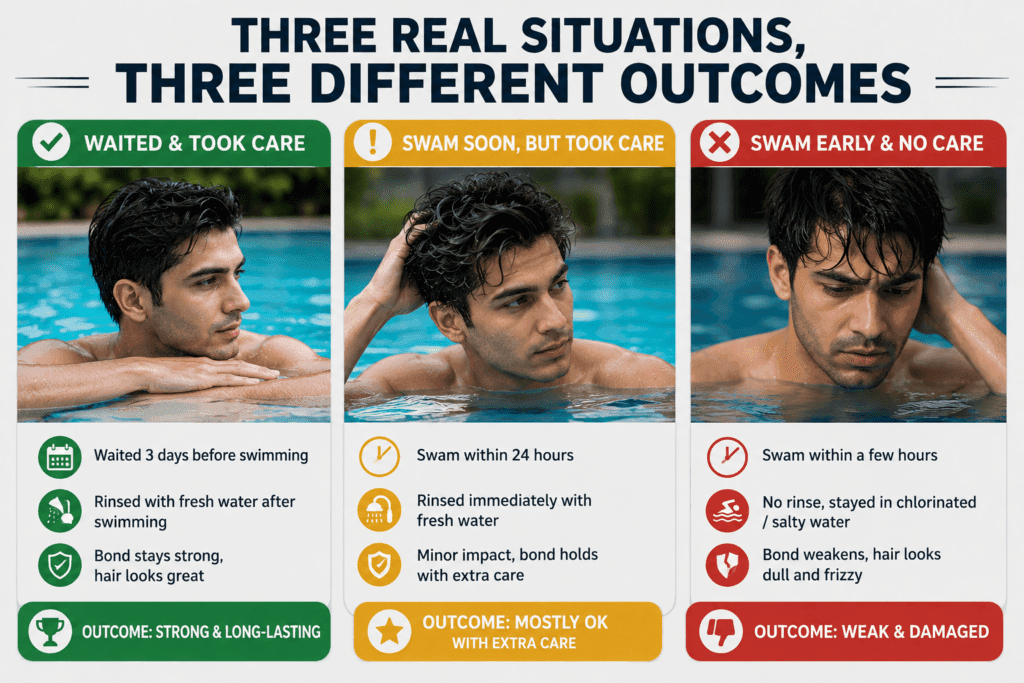
Three Real Situations, Three Different Outcomes
Example 1: The First-Timer Who Didn’t Wait
Ravi got his hair system done on a Thursday. Saturday morning, his friends called him for a pool session. He figured two days was enough. He didn’t wear a cap. The bond held through the swim but started lifting at the edges by Sunday evening. He had to go back to the clinic for an emergency rebond. One impatient weekend cost him an extra visit and the embarrassment of a loose edge.
Example 2: The Regular Swimmer Who Got It Right
Priya is a fitness person. Swimming three times a week is non-negotiable for her. When she got her hair system, she told the technician upfront. They used a waterproof adhesive, spent extra time on edge sealing, and gave her a specific aftercare routine for swimmers. Six weeks later, her bond was still solid. She hadn’t skipped a single swim.
Example 3: The Beach Holiday Situation
Arjun planned a Goa trip two weeks after getting his hair system. He followed the 72-hour wait, rinsed before every swim, used conditioner daily, and scheduled a maintenance visit right after he returned. His system looked exactly the same coming back as the day he got it done. Planning ahead made all the difference.
The Real Benefits of Swimming With a Hair System Done Right
No lifestyle restrictions when you use the right bonding method.
Confidence in and around water, which most people don’t expect to get back.
Waterproof adhesives are widely available and don’t cost Can You Swim After Hair Bonding significantly more.
You stop planning your life around your hair. That mental freedom is genuinely valuable.
Proper aftercare actually extends your system’s lifespan even with regular swimming.
Myths vs Facts
Myth | Fact |
You can never swim with a hair system | You absolutely can, with proper bonding and aftercare |
Chlorine destroys the bond instantly | Regular swimming weakens it gradually, not immediately |
A swim cap makes you look suspicious | Most people just think you’re being careful about your hair |
Waterproof adhesives are uncomfortable | Modern waterproof bonds are as comfortable as standard ones |
Saltwater is safer than chlorinated pools | Both have similar effects on adhesive strength |
You have to avoid all water for weeks | Only 24 to 72 hours post-application is the actual restriction |
Hair systems look different when wet | A good quality system looks natural wet or dry |
Who Should Know This?
Anyone who swims regularly and has been avoiding it since getting a hair system.
People who live near the coast or visit beaches frequently.
Athletes and gym-goers whose routines involve pools.
Anyone planning a holiday that involves water activities.
People who were told “avoid water” without any further explanation.
Why Does This Confusion Exist?
Hair bonding adhesives have improved dramaticall Can You Swim After Hair Bonding over the last decade. But the information clinics share with clients hasn’t always kept up. Many technicians apply old advice to new products. Some clinics use standard adhesives for everyone regardless of lifestyle, which means the advice to avoid water is accurate for their product but not universal. The early sign that your bond is struggling with water is usually edge lifting. You might notice a corner peeling slightly or the base feeling less flush against the scalp after swimming. Catching this early and scheduling a touch-up prevents full detachment. Can you prevent water damage entirely? Not completely. But with the right adhesive, proper prep, and consistent aftercare, water damage becomes a minor maintenance consideration rather than a lifestyle limitation.
Swimming With a Hair System vs Other Hair Loss Solutions
Hair Bonding System | Hair Transplant | Topical Medicines | Regular Wig | |
Can you swim | Yes, with precautions | Yes, fully | Yes | Risky, may shift |
Water resistance | High with right adhesive | Complete | Not applicable | Low |
Maintenance needed | Regular rebonding | Minimal | Daily application | Frequent readjustment |
Cost | Moderate | High upfront | Low | Low to moderate |
Natural look in water | Very natural | Fully natural | Varies | Often looks off |
Best for | Active lifestyle, flexibility | Permanent solution | Early hair loss | Occasional use |
Why the Right Clinic Changes Everything
Getting a hair system from someone who actually understands your lifestyle makes a bigger difference than most people realize. A proper consultation means your technician asks about your routine before picking an adhesive. A swimmer gets a waterproof bond. A gym person gets something that handles sweat. Someone who works in air conditioning gets a different formulation. It’s not one product for everyone. Quality matters in the base material too. A thinner, more breathable base handles moisture better. A well-made system dries faster and resists lifting longer than a cheap one.
People Also Ask
Can You Swim After Hair Bonding Wait at least 48 to 72 hours after hair bonding before swimming. This allows the adhesive to fully cure and reach maximum hold strength. Swimming before this window is the most common cause of premature bond failure. Your technician will specify the exact wait time based on the adhesive used.
Chlorine weakens hair bonding adhesives over time with repeated exposure. A single swim rarely causes immediate damage, but regular pool use without proper aftercare will shorten your bond’s lifespan. Rinsing immediately after swimming and using water-resistant adhesives significantly reduces chlorine damage.
Yes. Saltwater and sun exposure require some preparation, but beach trips are manageable. Use a water-resistant adhesive, wet your hair before entering the sea, rinse thoroughly after, and apply leave-in conditioner. Schedule a maintenance visit soon after an extended beach holiday.
Water-resistant or waterproof polyurethane-based adhesives are best for regular swimmers. These are specifically formulated to maintain bond strength during repeated water exposure. Inform your technician about your swimming habits before the application so they choose the right product.
After the initial curing period of 24 to 72 hours, showering is completely fine. Use lukewarm water rather than hot, which can soften certain adhesives. Gently massage the scalp rather than rubbing aggressively at the base edges.
Signs include edge lifting, the base feeling slightly raised from the scalp, or the system moving slightly when you touch it. If you notice any of these after swimming, contact your clinic for a touch-up before the issue spreads further.
Chlorine and saltwater dry out hair over time, whether natural or part of a hair system. Use a sulfate-free shampoo after swimming and a leave-in conditioner regularly. This keeps the hair soft and extends the overall lifespan of the system.
Yes, and it’s actually a good idea. A silicone swim cap provides a barrier against chlorine and saltwater, protecting both the hair and the bond. It doesn’t draw attention and is common enough in pools that nobody looks twice.
Swimmers should plan maintenance visits every 3 to 4 weeks rather than the standard 4 to 6 week schedule. Regular water exposure stresses the bond more than daily life does. Staying ahead of maintenance prevents unexpected detachment.
Yes, with preparation. Saltwater is less chemically harsh than chlorine but still affects adhesive strength over time. Pre-rinse with fresh water, limit extended submersion, rinse immediately after, and condition. For longer beach holidays, use a waterproof adhesive and schedule a post-trip maintenance visit.
Pro Tips From Hair Professionals
Tell your technician your exact lifestyle before they start. Can You Swim After Hair Bonding
Swimmers, gym users, and desk workers need different bonding approaches.
Pre-rinsing with fresh water before entering a pool or sea is one of the simplest ways to protect your bond and most people skip it.
Keep a travel-size leave-in conditioner in your swim bag. Using it right after you towel dry makes a noticeable difference in hair quality over time. Can You Swim After Hair Bonding
Avoid rubbing your hairline aggressively with a towel. The edges are the most vulnerable part of the bond.
Hot tubs and steam rooms are harder on adhesives than regular pools. Be more cautious with these and limit time in high-heat water environments.
If you feel the bond shifting slightly after a swim, book a touch-up immediately. Small lifts become big problems when left alone.
Always use sulfate-free shampoo. Sulfates strip the adhesive compound and reduce bond life significantly over repeated washes.
Key Takeaways
You can swim after hair bonding once the adhesive has fully cured, typically 48 to 72 hours after application.
Chlorine and saltwater weaken bonds gradually, not immediately. Proper aftercare prevents most of this damage.
Waterproof adhesives exist specifically for active users and should be requested upfront if swimming is part of your routine. Can You Swim After Hair Bonding
Pre-rinsing before swimming and rinsing immediately after are the two most impactful habits you can build.
Swimmers need maintenance visits every 3 to 4 weeks rather than the standard schedule.
A swim cap significantly reduces water exposure to the bond and is worth using in pools.
The quality of the clinic and adhesive matters as much as your aftercare routine.
Edge lifting after swimming is an early warning sign. Address it quickly.
Final Thought
Swimming with a hair system isn’t complicated once you know what you’re doing. The fear mostly comes from not having the right information at the right time. Can You Swim After Hair Bonding
The short version: wait for the bond to cure, use the right adhesive for your lifestyle, take care of it after each swim, and keep up with maintenance. That’s genuinely it.
Your hair system shouldn’t stop you from living the way you want. It’s supposed to do the opposite.
Want to Swim Without Worrying About Your Hair?
Book a free consultation with our team. We’ll look at your lifestyle, recommend the right bonding method, and make sure you walk out with a system that fits how you actually live, not just how you sit at a desk.
Book your free consultation today. No pressure, just honest advice.