
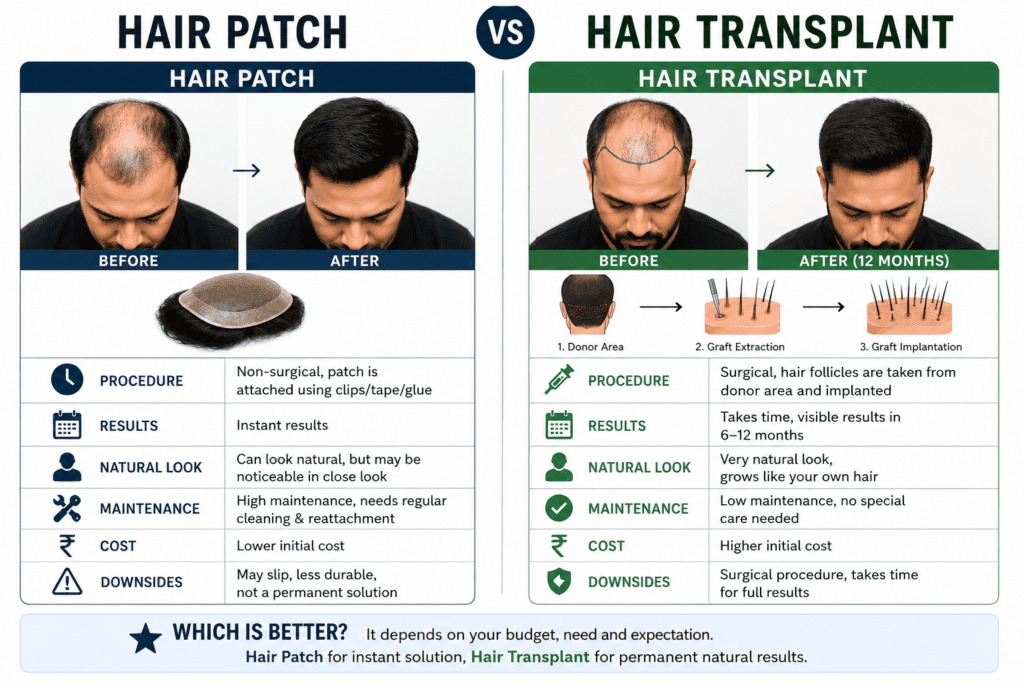
Hair Patch vs Hair Transplant: Real Cost and Results Compared
You’ve been staring at that receding hairline for months now. Maybe even years. You’ve Googled it late at night. Watched YouTube videos. Asked friends who’ve “been there.” And somewhere between all that research, two options keep coming up a hair patch or a hair transplant. Both promise results. Both seem convincing. But here’s the honest truth most people never hear upfront: they are completely different solutions for completely different situations and choosing the wrong one could cost you thousands of rupees and months of disappointment. So before you book a consultation or swipe your card, let’s break this down the right way.
What Exactly Is a Hair Patch (Hair System)?
A hair patch also called a hair system, hair unit, or non-surgical hair replacement is a custom made piece of real or synthetic hair that is bonded directly to your scalp using medical-grade adhesive or clips.
Think of it as a precision-fitted solution that sits seamlessly over your bald or thinning area, giving you an instant full-head look with zero surgery, zero recovery time, and zero waiting.
Modern hair patches have come a long way. Today’s systems use:
Ultra-thin skin bases that mimic the natural scalp texture
100% human Remy hair for the most realistic look and feel
Custom density and hairline design matched to your existing hair
Breathable lace or mono bases for comfort in India’s climate
The result? Someone sitting across from you even up close genuinely cannot tell the difference.
What Is a Hair Transplant?
A hair transplant is a surgical procedure where hair follicles are extracted from a donor area (usually the back of your scalp) and implanted into the bald or thinning regions.
The two most common techniques are:
FUE (Follicular Unit Extraction) — individual follicles extracted one by one, minimal scarring
FUT (Follicular Unit Transplantation) — a strip of scalp is removed, follicles separated, then implanted
Results from a transplant are permanent — because the transplanted follicles are genetically resistant to DHT, the hormone responsible for hair loss. But here’s where most people get surprised
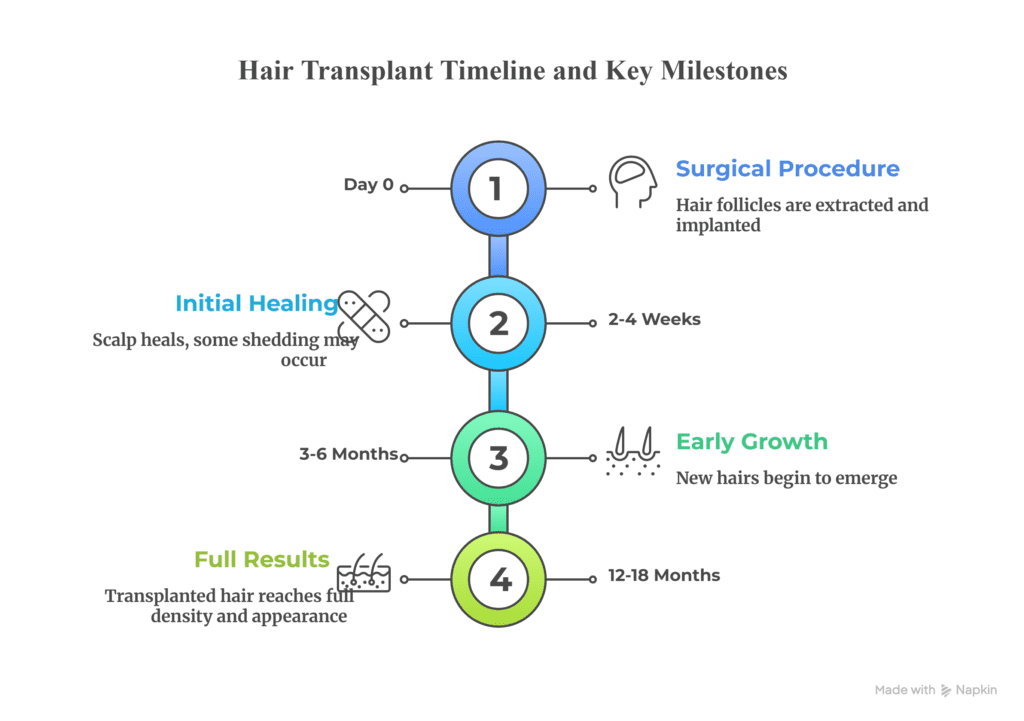
The results take 12 to 18 months to fully appear. And not everyone is an eligible candidate.
The Real Cost Comparison What Nobody Tells You Upfront
Factor | Details |
Initial Setup Cost | ₹8,000 – ₹25,000 per unit |
Maintenance (every 4–6 weeks) | ₹1,500 – ₹4,000 per session |
Annual Cost (approx.) | ₹30,000 – ₹70,000/year |
Lifespan of One Unit | 6 to 12 months with proper care |
So over 5 years, you’re potentially spending ₹1.5 lakh to ₹3.5 lakh — ongoing.
Hair Transplant Cost in India
Factor | Details |
FUE Transplant | ₹40,000 – ₹1,50,000+ |
FUT Transplant | ₹30,000 – ₹80,000 |
Depends On | Number of grafts, clinic reputation, city |
Post-op Medication | ₹5,000 – ₹15,000 additional |
Touch-up Session (if needed) | ₹20,000 – ₹50,000 extra |
A transplant is a one-time investment but the upfront cost is significant, and results are not guaranteed if your hair loss continues progressing.
But here’s what most people still don’t realize.
Cost alone shouldn’t drive this decision. Your hair loss stage, lifestyle, timeline, and long-term goals matter far more than the price tag.
Head-to-Head Comparison: Hair Patch vs Hair Transplant
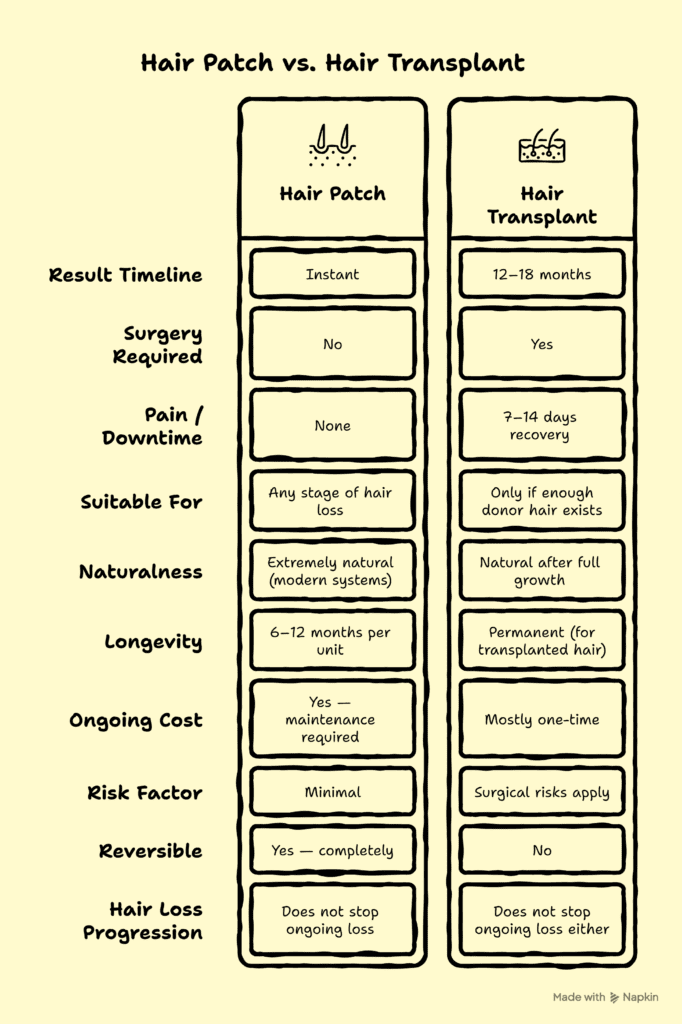
Who Should Choose a Hair Patch?
Hair Patch vs Hair Transplant A hair patch is the smarter choice if:
You want immediate results a wedding, interview, event, or simply can’t wait 18 months
Your hair loss is at an advanced stage (Norwood Scale 5–7) and donor hair is insufficient for a transplant
You’re not ready for surgery due to health conditions, anxiety, or personal preference
You want to test the look before committing to a permanent surgical option
Your budget doesn’t allow a lump-sum transplant investment right now
You travel frequently and need a low maintenance, reliable daily solution
Modern hair systems especially human hair patches look and feel indistinguishable from natural hair. You can shower, swim, sweat, and sleep in them without worry.
Who Should Choose a Hair Transplant?
A hair transplant makes more sense if:
Your hair loss is early to mid-stage (Norwood Scale 2–4) with strong donor hair
You want a truly permanent solution and never want to think about maintenance
You’re comfortable with surgery and a 12–18 month waiting period for full results
Your lifestyle demands zero daily hair care routine
You can invest ₹60,000–₹1.5 lakh upfront without financial strain
It’s important to understand a hair transplant moves existing hair. It does not create new hair. If your hair loss continues post-transplant (which it often does for younger patients), you may still need additional treatments or even a hair system later.
This is where things become interesting many people end up using both, starting with a hair patch for immediate coverage while waiting for transplant results to grow in Hair Patch vs Hair Transplant
The Hidden Factor: Lifestyle Fit
Hair Patch vs Hair Transplant Here’s something most comparison articles skip entirely.
Your daily lifestyle matters enormously in this decision.
Do you sweat heavily? High-quality hair patches handle this well today but require regular maintenance.
Do you play contact sports? A well-bonded system stays secure, but consult your specialist for the right adhesive.
Are you in a client-facing role where appearance confidence matters daily? A hair patch delivers that confidence from Day 1.
Are you in your 20s with aggressive hair loss? Surgeons often advise waiting because transplanting too early can leave you with uneven coverage as surrounding hair continues to fall.
Very few brands understand this correctly the right recommendation depends not on what sounds more “permanent,” but on what actually fits your life right now.
Real Results: What to Actually Expect
Hair Patch What You’ll See
Day 1: Full, natural-looking hair. Immediate transformation.
Week 1: You’ve adjusted to the feel. Most people around you have no idea.
Month 3–4: First maintenance session to re-bond and clean the system.
Month 6–12: Replace the unit for the freshest look and hygiene.
Hair Transplant What You’ll Actually Experience
Week 1–2: Redness, scabbing, sensitivity at the donor and recipient sites.
Month 1–3: Shock loss transplanted hair falls out. This is normal but emotionally difficult.
Month 4–6: New hair starts growing. Still patchy and thin.
Month 9–12: Visible improvement. Looking better.
Month 12–18: Full results. If all goes well, natural permanent hair Hair Patch vs Hair Transplant
The transplant journey requires patience and emotional resilience that most people underestimate.
Expert Insight: What Our Hair Specialists Say
Our hair restoration experts work with clients across every stage of hair loss daily. Here’s the pattern they consistently observe:
“The biggest mistake people make is choosing based on what sounds more permanent, not what’s right for their specific situation. A 24-year-old with aggressive diffuse thinning is almost always better served by a quality hair system than rushing into surgery. Meanwhile, someone in their 30s with stable, early-stage hair loss and strong donor hair is a great transplant candidate. There’s no one-size fits-all answer.”
The right answer is always personalized which is exactly why a proper consultation matters more than any online article.

Frequently Asked Questions
Modern hair patches use ultra thin, breathable bases that feel natural against the scalp. Most wearers report that within a week, they forget they’re wearing it entirely Hair Patch vs Hair Transplant
Yes. With proper bonding and waterproof adhesive, you can swim, sweat, and exercise normally. Your specialist will advise the right maintenance routine based on your activity level.
When done by a skilled surgeon with proper hairline design, yes absolutely. The key is choosing the right clinic and having realistic expectations about the 12–18 month growth timeline
Maintenance sessions typically range from ₹1,500 to ₹4,000 and are required every 4–6 weeks. Many clients find this very manageable compared to the upfront cost of surgery.
Transplanted hair is permanent, but surrounding natural hair can still fall out. Many doctors recommend pairing a transplant with medication (minoxidil, finasteride) to slow progressive loss.
Absolutely. Many people use a hair patch for immediate coverage while considering a transplant and transition once they’re ready. A consultation with our experts can help you map out the right long-term plan.
A hair patch gives same-day results. A hair transplant requires 12–18 months before you see full growth. If timeline matters to you, the answer is clear.
Still Not Sure Which One Is Right for You?
You don’t have to figure this out alone.
Our hair restoration specialists have helped thousands of people across all ages, hair types, and hair loss stages find the solution that actually works for their life.
No pressure. No sales pitch. Just an honest conversation about your hair, your goals, and what will genuinely give you the best results.Hair Patch vs Hair Transplant
💬 Chat With Our Expert on WhatsApp It’s Free
Get a personalized recommendation based on your specific hair loss stage, lifestyle, and budget.
👉 Chat on WhatsApp Now Real answers in minutes, not days.